
8 of the best virtual tabletop software in 2026 for playing RPGs online
Virtual tabletops (VTTs) keep multiplying, and a lot has changed since our last roundup. Fantasy Grounds went free. Foundry shipped version 14. Wizards of the Coast pulled the plug on Sigil, its 3D tabletop. Daggerheart came out, and Critical Role started Campaign 4 on the 2024 D&D rules.
Here are eight worth your time in 2026, split into two camps: simple tools built around roleplaying, and the tactical heavyweights.
Simple VTTs built for roleplaying
Shows like Critical Role and Dimension 20 sold a lot of people on the talking part of TTRPGs. Big tactical VTTs can feel like a clunky video game bolted on top of that. These four keep setup light and put the conversation first.
1. SendingStone

SendingStone is video chat with a virtual tabletop built in. It runs in the browser, works on phones, and players join with just a URL. No login needed.
You get video and voice chat with AR face masks, screen sharing, player portraits, a 3D dice roller, animated backdrops, and a synced audio mixer. The tabletop has live cursors, tokens, drawing tools, rulers, fog, and an initiative tracker. You can also upload PDFs and character sheets and share them with the party.
The free plan includes video chat with one ad break. Premium removes ads and unlocks unlimited video. Pay per session or subscribe.
2. Owlbear Rodeo
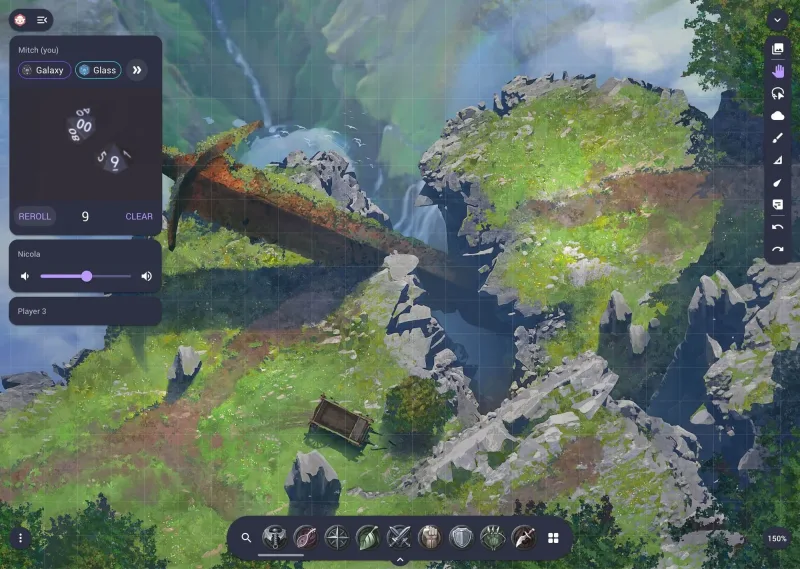
Owlbear Rodeo is a fast, browser-based map tool you can learn in minutes. Its extensions store adds dice, initiative tracking, dynamic fog, and plenty of community add-ons. The free plan covers most groups.
It has no video chat, so most people pair it with Discord and Kenku FM for audio.
3. Alchemy RPG

Alchemy cares more about mood than maps: motion graphics, music, and ambient sound. It started on Kickstarter and now has official support for games like Call of Cthulhu, Candela Obscura, World of Darkness, and much of Free League's catalog. It's free to start, with paid upgrades and game modules.
4. Quest Portal

Quest Portal is a clean, friendly VTT for web and mobile with a built-in AI assistant to help run your campaign. It comes in Free and Pro plans.
The tactical heavyweights
These have deep automation, huge content libraries, and grid combat. They take more prep and can drift into video game territory, but they're hard to beat for crunch.
1. Roll20

Roll20 launched in 2012 and is still the default pick for a lot of groups. It runs in the browser with character sheets, a big marketplace, and built-in voice and video, though many groups use Discord anyway. In 2024 it bought Demiplane, the character builder site. The interface can be janky, but it's free to start and supports a long list of games.
2. Foundry Virtual Tabletop
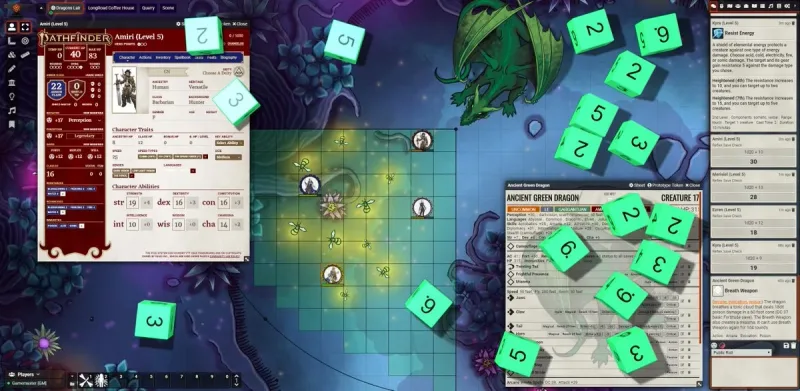
Foundry is a paid license that you host yourself. The software is proprietary, but its module scene is enormous, with add-ons for almost anything. Version 14 landed in April 2026 with a new Scene Levels feature. Expect a learning curve.
3. Fantasy Grounds
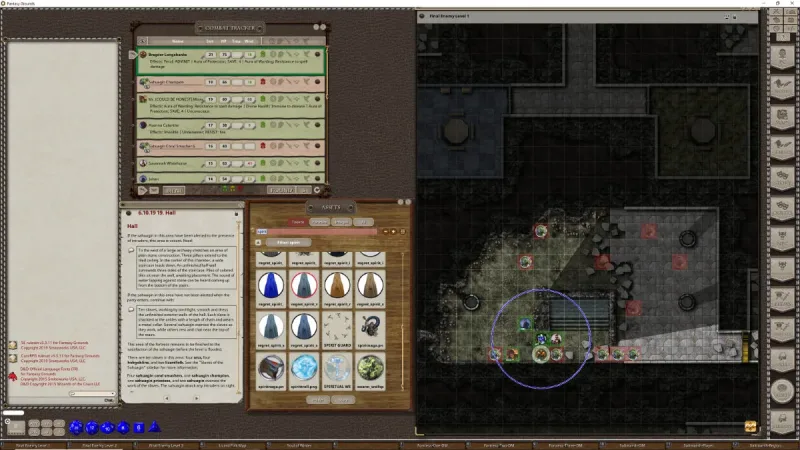
Formerly Fantasy Grounds Unity, now Fantasy Grounds VTT. It went free to play in November 2025, hosting included. You only pay for licensed rulebooks, adventures, and extras like maps and dice. It's a desktop app with official content for D&D, Pathfinder, and many more.
4. TaleSpire

TaleSpire is the pretty one. You build 3D maps out of tiles and props, then move minis around them like a digital diorama. It's $24.99 on Steam and still in Early Access. Great for groups who care about looks, heavier on prep.
Which one?
Want crunch, automation, and a big community? Pick Roll20, Foundry, or Fantasy Grounds.
If you think the best part of a TTRPG is the RP, try something lighter. SendingStone is free to start and takes one link to get your group in a room.
Share this article
Want more content?
Subscribe to get notified of new articles, LFG listings, new features, and more


